





New building services publications set to revolutionise design practices

In a significant development for the building services industry, a set of four comprehensive guides were published on 29 February 2024. These publications, collectively designated as BG 84/2024, BG 85/2024, BG 86/2024, and BG 87/2024, promise to usher in a new era of efficiency and innovation in building design.
Contents |
[edit] BG 84/2024: Space and Weight Allowances
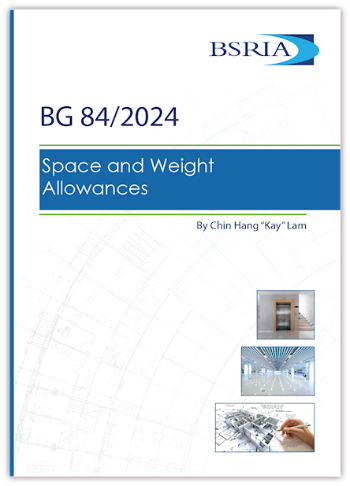
One of the cornerstone publications in this release, BG 84/2024, presents a wealth of crucial data on space and weight allowances for mechanical, electrical, and public health equipment. This guide is indispensable for architects, engineers, and designers seeking to optimise spatial planning and ensure compliance with regulatory standards. From floor space allowances to means of escape, BG 84/2024 provides comprehensive insights backed by meticulously curated graphs and information.
BSRIA’s Space and Weight Allowances guide provides useful information for the early stages of design. Graphs are provided on areas, heights and weights of mechanical, electrical and public health equipment. Information is also included on floor space allowances, space for access, occupancy densities and means of escape.
|
This guide partly replaces BG 9/2011 Rules of Thumb 5th Edition. Information has been updated based on consultation with designers and manufacturers, and new information has been provided on lifts and electrical switchgear.
[edit] BG 85/2024: Mechanical Criteria
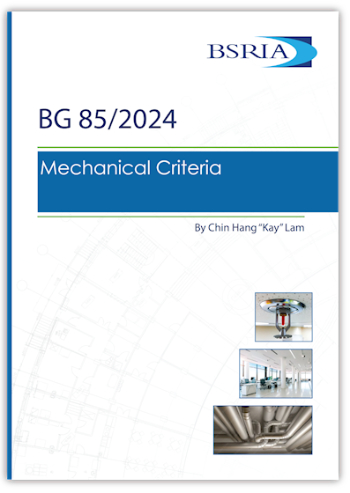
Another essential addition to the collection, BG 85/2024 focuses on mechanical building services and public health systems. Offering valuable guidance for the early stages of design, this guide covers critical aspects such as heat system temperatures, water consumption, and airtightness criteria. With updated information on residential sprinklers and other key elements, BG 85/2024 equips professionals with the knowledge necessary to enhance efficiency and sustainability in their projects.
This guide provides useful information for the early stages of design of heating, cooling, ventilation and public health systems. This includes heat system temperatures, water consumption and airtightness criteria.
Download the sample preview to view the full table of contents.
|
This guide partly replaces BG 9/2011 Rules of Thumb 5th Edition. Information has been updated based on consultation with designers and manufacturers, and new information has been added, including on residential sprinklers.
[edit] BG 86/2024: Electrical Criteria
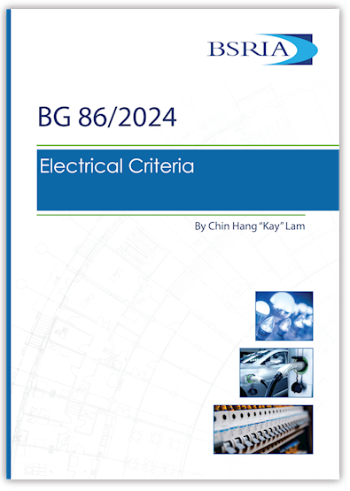
In the realm of electrical building services, BG 86/2024 emerges as a definitive resource for design professionals. This guide delves into crucial considerations including voltages, IP ratings, and recommended lighting levels. Moreover, BG 86/2024 introduces new insights into emerging technologies such as photovoltaic systems and electric vehicle charging facilities, reflecting the evolving landscape of electrical design practices.
This guide provides useful information for the early stages of design of electrical building services. This includes voltages, ingress protection (IP) ratings and recommended lighting levels.
Download the sample preview to view the full table of contents.
|
This guide partly replaces BG 9/2011 Rules of Thumb 5th Edition. Information has been updated based on consultation with designers and manufacturers, and new information has been added, including on photovoltaic systems and electric vehicle charging facilities.
[edit] BG 87/2024: Useful Information Guide
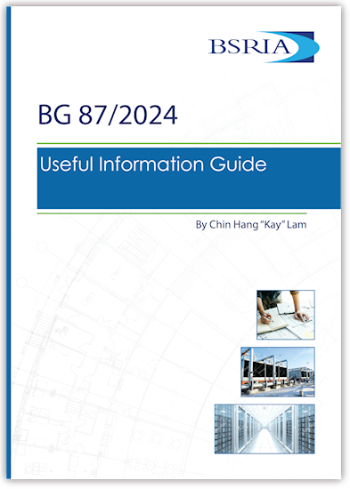
Rounding off the quartet of publications, BG 87/2024 serves as a comprehensive reference manual for building services projects. From CO2 emissions factors to compliance criteria with Part L of the Building Regulations, this guide offers a wealth of indispensable information. Notably, BG 87/2024 features an enhanced building services glossary, aiding professionals in navigating industry terminology, alongside valuable updates on resilience classifications for data centres.
This guide provides useful reference information for building services projects. This includes CO2 emissions factors and criteria for compliance with Part L of the Building Regulations.
|
Download the sample preview to view the full table of contents.
This guide partly replaces BG 9/2011 Rules of Thumb 5th Edition. Information has been updated based on consultation with designers and manufacturers. An enhanced building services glossary has been added, defining key terms for the industry, and new information has been included on resilience classifications for data centres and noise ratings.
Superseding BG9/2011
[edit] Concluding comments
It's important to note that these groundbreaking publications will supersede the outdated BG9/2011, reflecting the latest advancements and best practices in the field of building services. By embracing the insights offered by BG 84/2024, BG 85/2024, BG 86/2024, and BG 87/2024, industry professionals can elevate the quality, efficiency, and sustainability of their projects, driving positive outcomes for clients and communities alike.
With these new publications poised to reshape design practices and set new benchmarks for excellence, the future of building services looks brighter than ever before.
This article originally appeared on the BSRIA news and blog site as "Introducing our New BSRIA Guides: BG84/85/86/87" dated February 2024.
--BSRIA
[edit] Related articles on Designing Buildings.
- Approved document L.
- BSRIA articles.
- BSRIA definitions.
- BSRIA.
- Building services.
- Building design process.
- ECA articles.
- Electrical engineer.
- Illustrated Guide to Mechanical Building Services.
- Mechanical and electrical.
- Mechanical, electrical and plumbing MEP.
- Mechanical and electrical.
- Rules of Thumb - Guidelines for building services.
- Space and Weight Allowances BG84 2024.
Featured articles
Check out some of the best features and news from Designing Buildings as well as key stories from around the web.

Bringing together expertise and creating cultural benefits.

CIOB celebrates positive Ofsted report.

The Building Safety Regulator announces a call for evidence.

Government approach could undermine delivery and regeneration.
World's first mass timber data centre.

The overlooked environmental aspect of data centre development.
Introduction to radon awareness

New technical information sheet published by CIOB.

Updated supplier guide can help electrical contractors engage with NHP.

CIAT confirm the winners of the 2026 architectural technology awards.

Government launches a one stop shop for flood preparedness.

Sir Edwin Lutyens: Britain's greatest architect? Book review.

CIOB publishes free template to help assess and manage risks.
ECA's reflections on Party Conference season

Burnham wants to be confident of winning before asking for a fresh mandate.